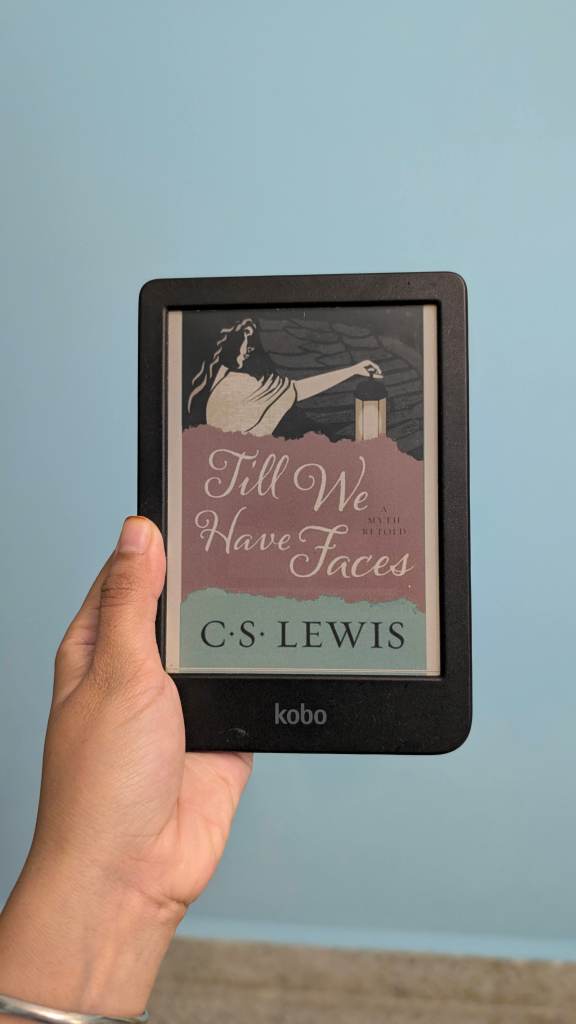
I picked up Till We Have Faces as part of my current exploration on the classical philosophy of education. In classical education, there is a strong emphasis on “old books” — These are works that have survived because their ideas are alive, still carrying weight across centuries by standing the test of time.
And what are “living ideas” if not those that refuse to sit quietly on the page, but instead follow you into your thoughts and change the way you see the world?
C.S. Lewis is a name often mentioned in the classical education circle. This novel is the first of his works I have read, and I see now why he is cherished in the classical tradition.
He doesn’t hand you neat lessons or tell you what to think. Instead, he opens a door and leaves you in a room filled with questions, symbols, and echoes you have to wrestle with yourself.
The novel is a retelling of the Greek mythology of Cupid & Psyche, but from Psyche’s older sister’s perspective. At its core, this is a novel about two ways of living:
One way is to cling, to resent, to demand answers from God, convinced that life is unfair.
Another way is to surrender, to trust in what is unseen, and to love without possessiveness.
What makes this book remarkable is that it exposes a truth many of us feel but rarely articulate. When life feels unjust, when we feel things have been stolen from us, we stand at a crossroads. Will we harden into bitterness, or open ourselves to a deeper trust?
Lewis wrote as a Christian, but the resonance of this book stretches beyond one faith tradition. Anyone who believes in God will recognize the struggle here: is the Divine cruel and silent, or present and wise beyond our comprehension?
As a muslim thinking from an Islamic perspective, the story echoes the idea of Tawakkul (trust in God’s plan even when it defies reason) and Qadr (divine decree that lies beyond our ability to map or treasure).
How often do we do the same? How often does our so-called love curdle into resentment because life will not obey us?
This is not an easy read. The language is heavy, the symbolism layered. But if you love God, and you want to experience fiction that makes you feel and reflect, this is that kind of book.
It makes you ask: am I living bitter and demanding? Or surrendered and at peace with what I cannot see?
Discover more from Najath Kareem
Subscribe to get the latest posts sent to your email.

 Najath Kareem